


WHAT IS A
PIPE BAND?
A Scottish bagpipe band or "pipe band" is a musical group that performs Scottish-style music on the great Highland bagpipes and drums. Members of a pipe band often wear traditional Highland attire while performing at events and competing in pipe band contests. The bagpipes are a cherished part of Scottish military tradition, which provides the template for modern civilian pipe bands. Though these musical groups are most common in the British Isles and areas which were a part of former British colonies, they can be found worldwide.
So, who and what make a pipe band? Find out here!
PIPER
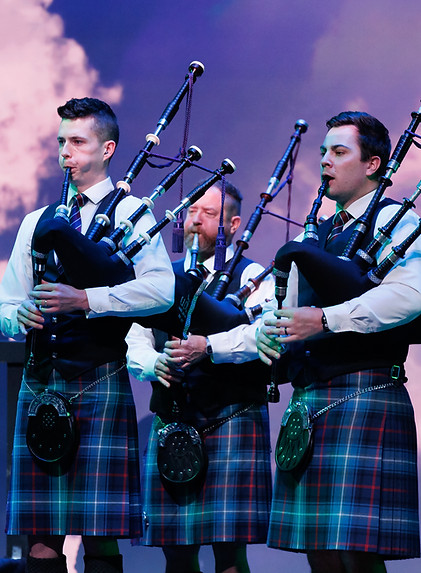
Bagpipes are woodwind instruments that have existed for centuries in different regions of the world. As the name suggests, bagpipes consist of a bag connected to pipes that make sound when air is forced through them by squeezing the bag.
One of the most well-known varieties of bagpipes is the great Highland bagpipe from Scotland, commonly referred to as “the pipes.” At the Utah Pipe Band, we play the pipes throughout the year for community events, holidays, funerals, weddings, and other special occasions. We also compete as both a band and soloists at competitions, which often take place at Scottish festivals and Highland games.
A new bagpipe student will usually spend a few months to a year on a practice chanter before attempting to play the bagpipes. A practice chanter (or simply “chanter”) is a flute-like instrument that is much smaller and quieter than the pipes, making it simpler to learn the correct finger position and develop good technique when just starting out. Even after making the jump to the bagpipes, a piper will practice on the chanter frequently throughout their career.
Ready to pick up the pipes?
BASS DRUMMER
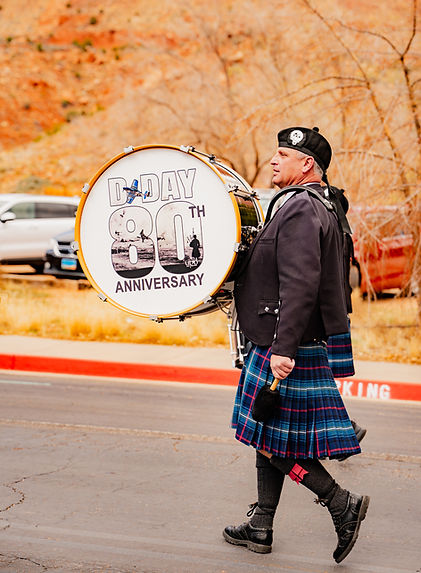
The bass drum is the largest instrument in the pipe band and the heartbeat that helps the band play in unison. This requires the bass drummer to have an excellent sense of rhythm and to pay close attention to the tempo set by the pipe major, who leads the band.
The bass drum is carried with a harness on front of the drummer’s body. To play, the drummer holds a soft-headed mallet in each hand and strikes either side of the drum with the mallets. Rather than keeping their arms in a single position and hitting the drum with the same, repeated arm motion, the drummer can use exaggerated arm movements, lifting the mallets above their head and swinging their arms in choreographed movements. This isn’t just for show but also to produce a desired sound when the mallets hit the drum.
A good bass drummer knows how to effectively control the drum’s volume and intensity and use the instrument’s rich, resonant tone to enhance the band’s overall sound. In competition settings, judges listen carefully for the clarity, steadiness, and vibrancy of the bass rhythm.
All set to give the bass drum a go?
SNARE DRUMMER
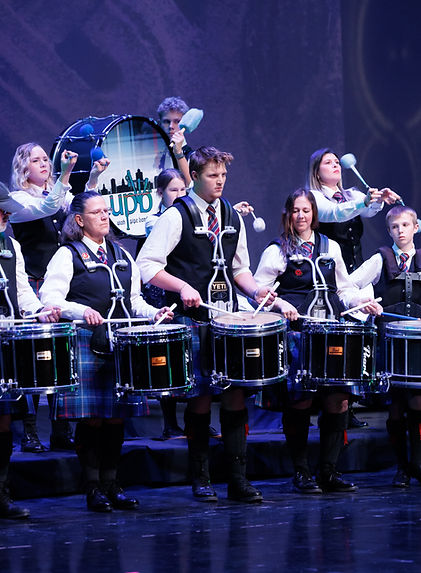
The snare drum or "side drum" gets its name from the tightly spiraled wires or “snares” beneath the drum. These snares give the drum its sharp staccato sound when struck with the drummer’s lightweight, wooden sticks.
Snare drummers play movements that add energy and complexity to the band’s music. Their playing must be musically precise and well-synchronized with the bagpipes and other drums. It’s up to the drum sergeant (the head drummer) to lead the snare drummers and ensure unity.
Many snare drummers learn to play on a practice pad before transitioning to a full snare drum. Commonly made with rubber or foam, these pads allow drummers to play at low volume without having to carry the drum on a harness. Even an experienced drummer will often transition between their pad and snare drum when practicing.
Ready to rock the snare drum?
TENOR DRUMMER
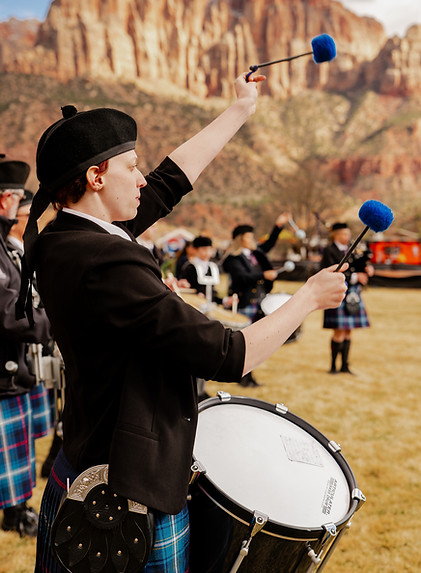
Tenor drummers or "tenors" add musical depth to the pipe band. A tenor's drum is always tuned to a certain pitch determined by the drum sergeant (the head drummer). When there is more than one tenor in a band, each drummer's instrument is tuned to a different pitch. This allows for melodic or harmonic effects when multiple tenors perform together. Tenor drummers must have a strong sense of timing and coordination. When done correctly, the tenor drums add rhythmic accents to the music that combine well with the bass and snare drums.
A tenor plays the drum by holding a soft-headed mallet in each hand and striking them against the top of the drum. These mallets are attached to cords that wrap around the drummer’s fingers, allowing the drummer to release the handles and use the cords to spin and swing the mallets while playing. Called “flourishing,” this adds visual flair to the pipe band’s performances.
Can't wait to start tenor drumming?
DRUM MAJOR
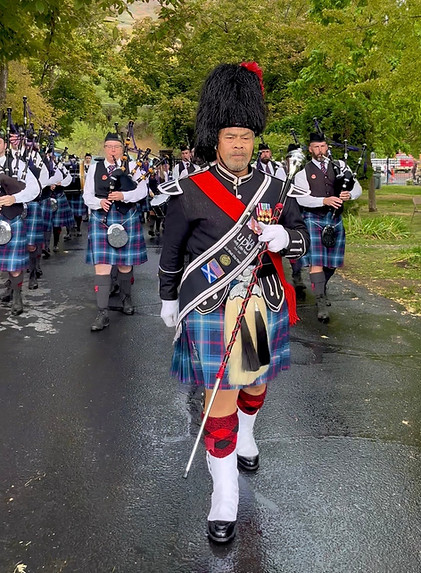
The drum major leads and sets the pace of the band while marching and during certain performances. Anyone of any age may begin training as a drum major without prior experience.
Many aspects of being a drum major are ceremonial. Even the term “drum major” is itself symbolic. For example, you don’t have to hold the rank of major nor play the drums to be a drum major (but having some knowledge of music is helpful). Although the drum major often leads the band while performing, they do so under the direction of the pipe major, the lead bagpiper in the band. This isn't always the case during massed bands where multiple pipe bands are performing together. In this case, a drum major may have the authority to direct all the bands at once.
As the ceremonial face of the pipe band, the drum major must not only adhere to the highest standards of grooming and decorum but also be an expert marcher. As directed by the pipe major, the drum major may help band members to practice marching and follow correct dress etiquette. They may even participate in competitions to showcase their dress, marching, and mace-flourishing capabilities. A
mace is a long, ornamental baton used to direct the band. It isn’t required to learn how to flourish a mace (i.e., spin and throw it), but a drum major can focus on developing this skill if they wish.
When it comes to dress, the drum major has a wide range of options. While they may wear the band’s standard uniform, they can also wear additional elements of Scottish and/or military-style dress as appropriate.
See yourself as a drum major?
HIGHLAND DANCER

Scottish Highland dance is a competitive and technical sport that demands stamina and grace. Dancers are often accompanied by traditional Scottish bagpipe music and may wear different attire depending on the dance being performed.
Historically, dances were performed by men and were a way to display strength, agility, and sometimes even readiness for battle. Each dance had its own story or symbolic meaning, often linked to historical events or folklore. Women began participating more widely in the 20th century, particularly when many men were away during the First and Second World Wars. Highland dance further developed into a competitive sport in the 1900s, with standardized rules and guidelines.
Dancers often compete in Highland games and dance contests where they are judged on technique, timing, and expression. They also perform at community functions, parades, and holiday celebrations. Whether dancing for sport, tradition, or entertainment, Highland dancers help preserve and share an important part of Scotland’s cultural heritage.
The Utah Pipe Band performs with dancers trained through the Barclay School of Highland Dance in Lehi, Utah.
Ready to get your dance on?